
What happens when artists don't wait for the world to curate their legacy? They build their own temples to creativity, establishing museums that blur the line between artwork and institution.
These aren't your typical museums assembled by committees or wealthy patrons. Each institution on this list was founded by the artist themselves, driven by a singular vision to share their creative universe on their own terms.
From sculptors who transformed entire landscapes into open-air galleries to painters who designed intimate spaces reflecting their artistic philosophy, these museums offer something conventional institutions cannot: direct access to an artist's complete creative mind, curated by the only person who truly understood it.
1. Museo Sorolla
Joaquín Sorolla y Bastida designed this museum within his own home and studio, ensuring his sun-drenched Mediterranean paintings would be displayed exactly as he envisioned. The artist personally planned the conversion before his death in 1923, with his widow executing his wishes.
The Andalusian-style garden he created still flourishes, offering visitors the same light and atmosphere that inspired his most celebrated works. Walking through these rooms feels like stepping into Sorolla's creative consciousness, where every wall placement was an artist's deliberate choice.

2. Hakone Open-Air Museum
Founded in 1969 by sculptor and collector Nobutaka Shikanai, this pioneering open-air museum transformed the concept of how sculpture should be experienced. Shikanai's vision was revolutionary: integrate monumental artworks with the natural mountain landscape, creating dialogues between human creativity and nature.
The 70,000-square-meter grounds showcase over 120 sculptures, with Shikanai personally overseeing the placement of each piece to maximize its interaction with changing seasons and light. His belief that art should be touched and lived with, not merely observed, fundamentally shaped the museum's accessible philosophy.

3. Vigeland Museum
Gustav Vigeland negotiated a remarkable deal with Oslo in 1921: he would donate all his works in exchange for a new studio. The result became this museum, originally his working space, filled with plaster models, woodcuts, and drawings that reveal his creative process.
Vigeland maintained complete control over his artistic legacy by establishing this institution during his lifetime. The building itself, which he helped design, reflects his aesthetic vision. Visiting here provides unfiltered access to how Norway's most celebrated sculptor developed his monumental bronze and granite figures.

4. Museo Frida Kahlo (Casa Azul)
Frida Kahlo and Diego Rivera established this museum foundation four years before her death, transforming her childhood home into a public institution. The cobalt blue walls she personally painted remain untouched, while her studio, wheelchair, and prosthetics offer raw insight into how physical suffering fueled her art.
Kahlo's intention was creating an intimate space where visitors could understand her life and Mexican identity as inseparable from her paintings. The lush courtyard garden and pre-Columbian artifact collection she curated reveal the cultural roots of her symbolic visual language.

5. Musée Rodin
Auguste Rodin personally negotiated the museum's founding in 1916, donating his entire collection to France in exchange for establishing this institution at the Hôtel Biron. He spent his final years arranging how his sculptures, drawings, and antiquities collection would be displayed.
The sculptor's vision extended beyond the galleries to the magnificent gardens, where he specified which bronzes should be placed outdoors. Rodin understood that his monumental works needed space to breathe, and the museum's layout reflects his conviction that sculpture should be experienced from multiple angles in natural light.

6. Chillida Leku Museum
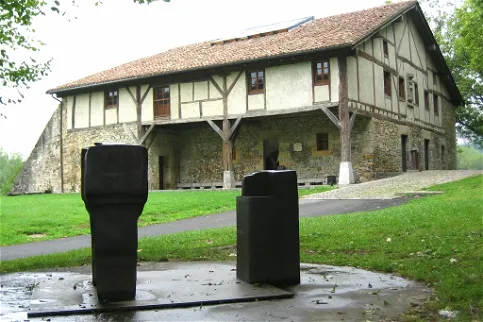
Eduardo Chillida spent over two decades developing this 16th-century farmhouse and its surrounding fields into a museum that opened in 2000, shortly before his death. The Basque sculptor personally positioned each massive steel and granite work throughout the landscape, creating specific relationships between forms and nature.
Chillida's concept was 'leku' (place in Basque) - not just a museum but a total environment where his abstract sculptures emerge from woods and meadows. Inside the restored caserio, smaller pieces and drawings reveal the genesis of his monumental outdoor works, all arranged according to his exacting spatial vision.
7. The Andy Warhol Museum
Before his unexpected death in 1987, Andy Warhol established The Andy Warhol Foundation for the Visual Arts, which directly led to this museum's 1994 founding. His estate's comprehensive donation reflects Warhol's obsessive archiving - he preserved everything from iconic silkscreens to grocery receipts.
The seven-floor museum embodies Warhol's democratic approach to art, displaying soup cans alongside celebrity portraits with equal reverence. His foresight in organizing his foundation ensured his complete artistic output, including 4,000 films and videos, would remain publicly accessible rather than scattered among private collectors.

8. Rembrandt House Museum
While Rembrandt himself didn't establish the museum, his deliberate transformation of this house into an artist's residence in 1639 laid the foundation for today's institution. The building showcases how Rembrandt designed his living and working spaces, with the studio arranged to capture perfect northern light.
The painstaking restoration used Rembrandt's own bankruptcy inventory to recreate his cabinet of curiosities, revealing how he curated objects as part of his creative process. His etching workshop demonstrates techniques he pioneered. This is artist-founded in spirit: Rembrandt architecturally designed an environment that would preserve his creative methodology for centuries.

9. Barbara Hepworth Museum and Sculpture Garden
Barbara Hepworth arranged for her studio and garden to become a museum before her tragic death in 1975, ensuring her working environment would be preserved intact. The subtropical garden displays her bronzes exactly where she positioned them, creating relationships between organic forms and living plants.
Walking through her workshop, with tools still laid out and unfinished pieces waiting, provides visceral understanding of her carving practice. Hepworth's vision was preserving the complete ecosystem of artistic creation - not just finished sculptures but the space, light, and natural surroundings that shaped her abstract vision of form and landscape.

10. Dalí Theatre-Museum
Salvador Dalí personally designed this surrealist monument, converting the town's ruined theatre into the world's largest surrealist object. From 1960 until his death, Dalí obsessively supervised every detail, from the giant eggs adorning the roof to the interior spatial configurations that disorient and delight.
Dalí declared it his greatest masterpiece, an immersive environment where walls, ceilings, and floors become canvases for his theatrical vision. He's entombed beneath the stage, making the museum simultaneously gallery, gesamtkunstwerk, and mausoleum. No curator could have imagined this fever dream - only Dalí could birth it into existence.

These ten museums represent something profoundly different from institutions assembled by boards and benefactors. When artists control their own legacies, they create spaces that function as extended artworks, where architecture, landscape, and curation become expressions of their creative philosophy.
Visiting these museums means encountering an artist's complete vision, unfiltered by external interpretation. They remind us that the most authentic way to understand creative genius might be stepping into the spaces artists designed to contain it.


