Images of The Legacy Museum: From Enslavement To Mass Incarceration
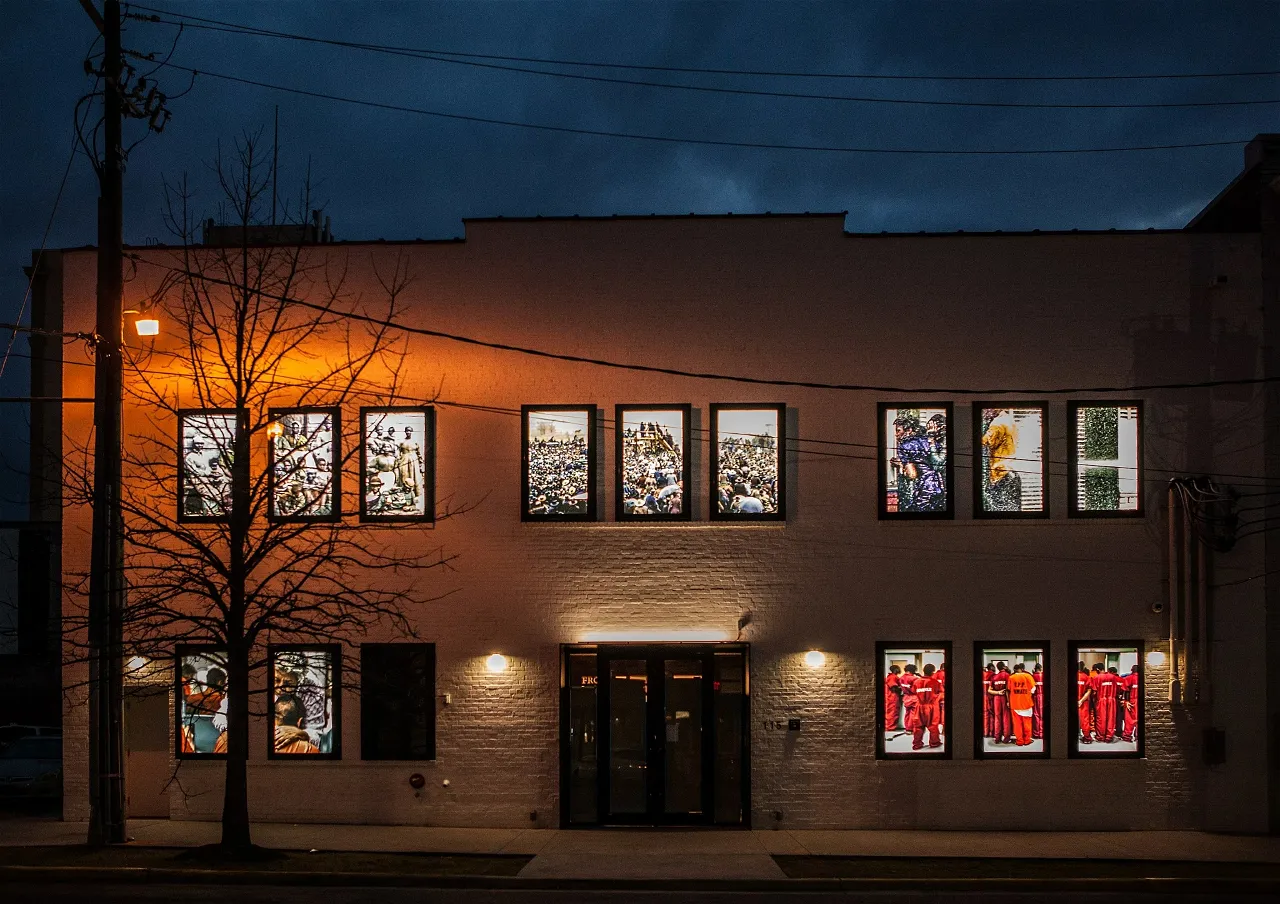

The Legacy Museum: From Enslavement To Mass Incarceration is a museum in Montgomery in United States.
History & Anthropology Specialized & Alternative
400 N. Court Street, Montgomery
No exhibitions in The Legacy Museum: From Enslavement To Mass Incarceration have been found.
The Legacy Museum: From Enslavement To Mass Incarceration has 3 ratings.
The Legacy Museum: From Enslavement To Mass Incarceration in Montgomery, Alabama, offers a powerful and thought-provoking experience that explores the history of racial injustice in America. Visitors consistently praise the museum for its comprehensive and unflinching look at the country's history of slavery, lynching, segregation, and mass incarceration.
The museum's exhibits are described as meticulously researched, visually striking, and emotionally impactful. Many reviewers note the effective use of interactive displays, personal narratives, and historical artifacts to bring the subject matter to life. The chronological layout helps visitors understand the connections between past injustices and current issues in the criminal justice system.
While the content is undeniably heavy and can be emotionally challenging, most visitors find the experience deeply educational and necessary. The museum is often described as eye-opening, even for those who consider themselves well-informed on the topics covered.
Some visitors mention that certain areas can get crowded, potentially impacting the viewing experience of some exhibits. A few also note that the museum can be overwhelming due to the sheer amount of information presented, suggesting that multiple visits might be beneficial for a full appreciation.
The staff receives high marks for their knowledge and helpfulness, enhancing the overall experience. Many reviewers also appreciate the museum's location in Montgomery, given the city's significant role in civil rights history.
Overall, The Legacy Museum is widely regarded as an essential educational experience that provides a comprehensive and unflinching look at a difficult but crucial aspect of American history. It's considered a must-see for anyone interested in understanding the long-term impacts of systemic racism in the United States.

We visited the Legacy Museum on Jan 8, 2026 as part of Road Scholar's "The Civil Rights Movement - Atlanta, Montgomery, Selma, Birmingham" program. It is one of the three Equal Justice Initiative (EJI) Legacy sites in Montgomery, AL, and one of the two where photography is not allowed. The latter was emphasized at the security checkpoint, of which there was only one line. I surrendered my foldable (smartphone) tripod to the staff, and would later do it two more times at the other two sites. Within the exhibition halls, staff members are positioned every 100 feet (give or take) to ensure visitors are on their best behaviors, i.e. no photography, no vandalism, etc.
The transatlantic slave trade is the subject of the first two halls, with the first focusing on the transits of the captured from Africa. Sets of pictorial, written and video content fill every wall. There is no particular order of viewing. The next hall continues with the arrival, transactions and transits from ports to new colonies in the New World. Life-sized models of slaves naked and in chains act as passageway that visitors pass to move on. Despite being previously informed, I did not understand the sheer volume of the museum's content. I stopped to read every content in detail because of the no-photography policy. By the time I was done perusing the transatlantic slave trade, more than 30 minutes had passed.
One section consists of small rooms designed to look like prison cells, each showing a brief holographic projection of a moment in the life of a slave. These projections are triggered by motion sensors. Another hall focuses on federal and state court decisions - most of them ruling against African-Americans - as well as numerous hate crimes and other (violent) racial injustices, all of which that had occurred since Reconstruction. Past that is a larger hall that displays copies of newspaper ads of slaves for sale on one side, and life during Reconstruction on the other. I had started to peruse the latter when I realized that I was approaching two hours in time spent in the museum. Deciding to head on to the other two sites, I was surprised to discover many more sections - including an art gallery - and the volume of content in each that I would miss.
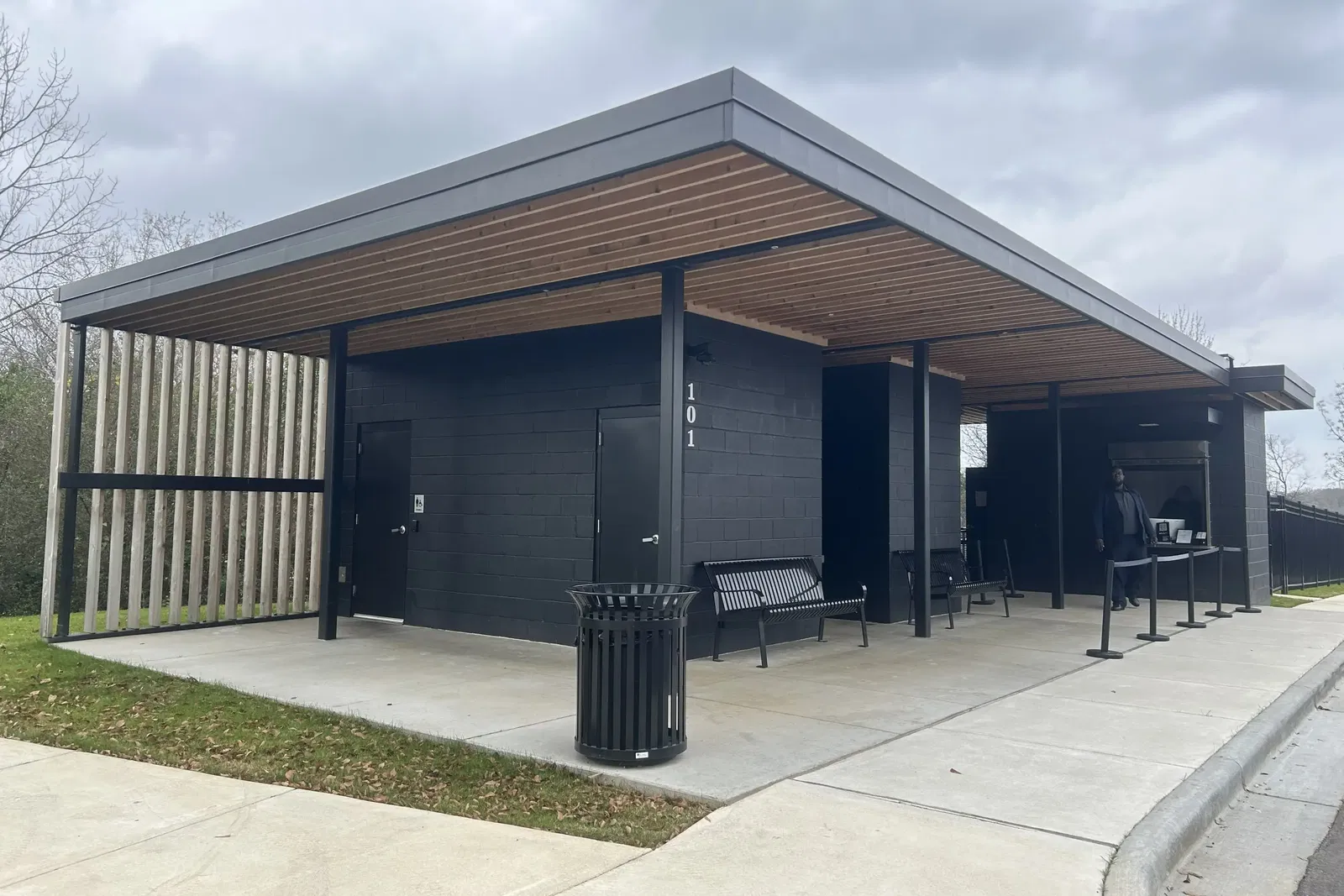
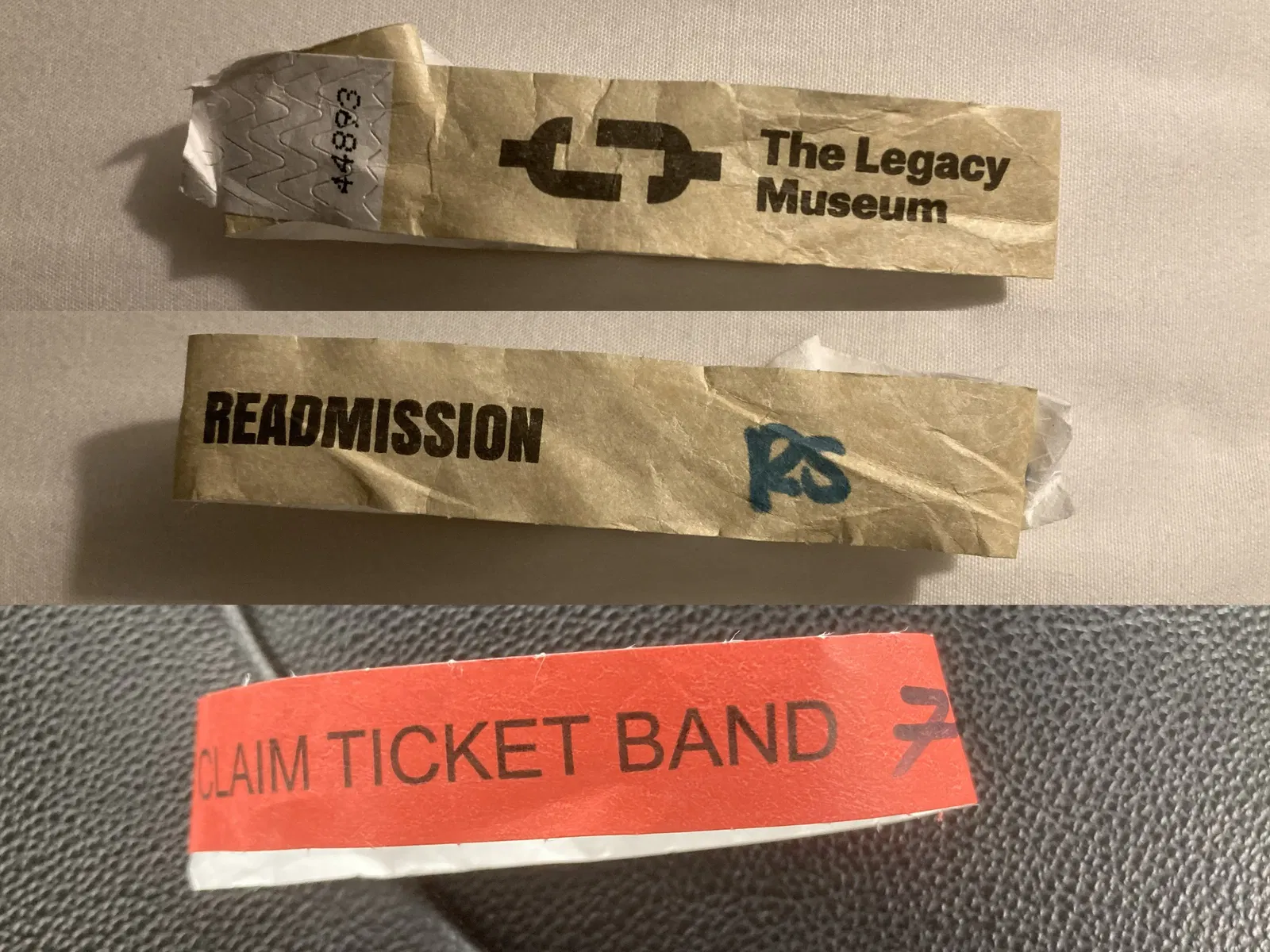
The Legacy Museum requires up to a day to truly appreciate its treasure. It is certainly worth visiting given its low admission price ($5 as of Jan 2026). However, I do not give this 5 stars because of the unnecessary security checkpoint to do the boat ride from Boat Launch at 101 Morris Street to Freedom Monument Sculpture Park, and vice versa. See attached image for further details
At 12:56pm, after visiting the National Memorial for Peace and Justice (NMPJ), I showed up at Boat Launch. There was a security checkpoint. I was told to turn over my tripod before getting on the boat. The big, burly bespectacled guy in the suit claimed that tripods could be used to vandalize the sculptures, and I could take the boat back and to this pier to get it back. He gave no explanation as to how a tripod would be a hazardous or dangerous object on a boat ride itself. The Sculpture Park has its own security checkpoint where I would turn over the tripod, and I wasn’t planning on coming back to this pier just to pick up my tripod. It would be a waste of time. So I waited for the shuttle to take me back to the Legacy Museum after stopping over at NMPJ.
When I finally arrived at Sculpture Park, 45 minutes of my time was wasted. This limited the time spent there. There was no necessity to have security checkpoint at Boat Launch when Sculpture Park has its own security checkpoint. Until EJI Legacy updates their policy to one that makes sense, this EJI site gets no more than three stars.
Visited on 8 Jan 2026
Terrific exhibit. Powerful and factual. Informative historical narrative of the experiences of enslaved peoples and the contemporary ramifications. Highly recommended!
Visited on 4 May 2025
This rating is based on the rating of this museum on several other platforms.
Discover museums near The Legacy Museum: From Enslavement To Mass Incarceration in or around Montgomery.