Images of Scavi di Oplontis
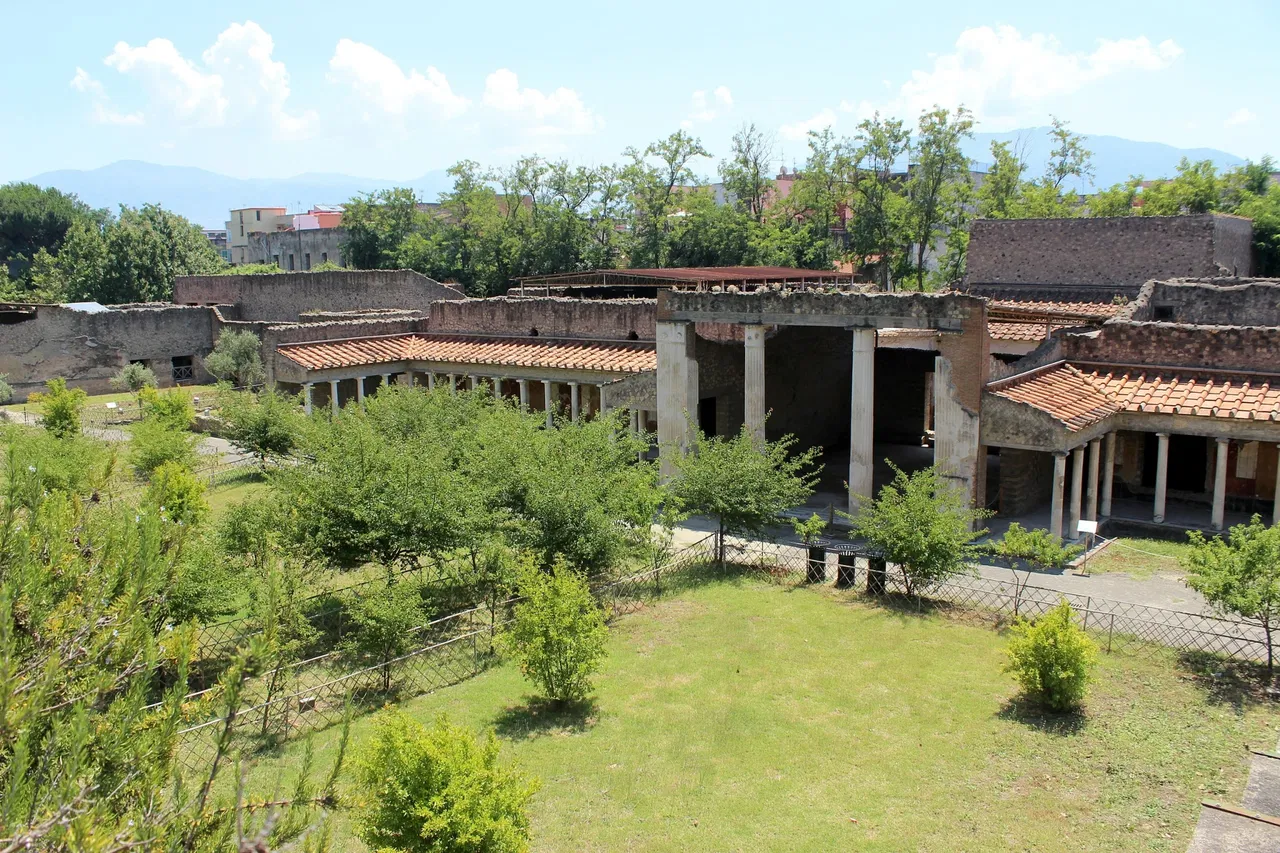

The Villa of Oplontis, discovered in 1964, offers a unique glimpse into the life of a noble Roman family. This villa, located in the ancient site of Oplontis, now known as Torre Annunziata, was buried under the eruption of Vesuvius in 79 AD. The villa's well-preserved state provides a fascinating insight into the Roman lifestyle and architecture of the time.
Built around the middle of the 1st century BC, the Villa of Oplontis is a significant example of suburban Roman villas. It is the largest of its kind found in the region around Herculaneum, Pompeii, and Stabiae. The villa's size and architectural style provide a unique perspective on the grandeur of Roman suburban residences.
On December 4, 1997, the Villa of Oplontis, along with Pompeii and Herculaneum, was included in the UNESCO World Heritage List. This recognition underscores the historical and cultural significance of the villa and its importance in understanding the Roman era.
History & Anthropology
No exhibitions in Scavi di Oplontis have been found.
Scavi di Oplontis has 1 rating.
The Scavi di Oplontis in Torre Annunziata, Italy, offers visitors an impressive glimpse into ancient Roman life. This archaeological site features well-preserved ruins of a luxurious villa, believed to have belonged to Emperor Nero's wife, Poppaea.
Visitors consistently praise the site's remarkable frescoes and intricate wall paintings, which have maintained their vibrant colors over the centuries. The detailed mosaic floors and the layout of the villa provide insight into the opulent lifestyle of Roman nobility. Many reviewers appreciate the less crowded atmosphere compared to nearby Pompeii, allowing for a more intimate exploration of history.
The site's well-maintained gardens and the partially restored rooms give a good sense of the villa's original grandeur. Some visitors note that the information provided on-site could be more comprehensive, suggesting that bringing a guidebook or hiring a guide might enhance the experience.
A few reviewers mention that the site is relatively small and can be thoroughly explored in about an hour or two. While this might be a drawback for some, others see it as an advantage, especially when combined with visits to other nearby archaeological sites.
Access to certain areas may be restricted due to ongoing restoration work, which can be disappointing for some visitors. However, many appreciate the continuous efforts to preserve and study the site.
Overall, the Scavi di Oplontis offers a valuable and engaging experience for those interested in Roman history and architecture, providing a quieter alternative to some of the region's more famous archaeological sites.
This rating is based on the rating of this museum on several other platforms.
Discover museums near Scavi di Oplontis in or around Torre Annunziata.