
Step into a museum where the glass cases, wooden galleries, and specimen arrangements haven't changed since 1891, offering a rare glimpse into how Victorians understood the natural world.
Welcome to one of Philadelphia's most unusual treasures, where the building itself is as much an artifact as the specimens it houses. The Wagner Free Institute of Science stands as a living monument to 19th-century scientific education and democratic ideals.
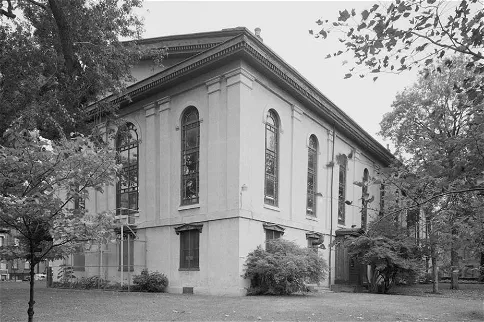
Nestled in north Philadelphia at 1700 West Montgomery Avenue, this National Historic Landmark offers visitors something increasingly rare: an authentic Victorian-era science museum that looks almost exactly as it did when it opened to the public over 130 years ago.
From Parlor Lectures to Public Education
William Wagner, a Philadelphia merchant and self-taught naturalist, founded the institute in 1855 with a revolutionary vision: free science education for everyone. What began as informal lectures at his colonial estate, Elm Grove, in 1847 quickly grew beyond his parlor walls.
Wagner's inclusive approach allowed women alongside men at a time when such access was unusual. By 1855, the crowds had grown so large that Wagner commissioned architect John McArthur Jr., who would later design Philadelphia's City Hall, to create a permanent home for his expanding educational mission.
After Wagner's death in 1885, renowned biologist Joseph Leidy took the helm and transformed the museum into something even more special. Leidy reorganized the entire collection according to Darwin's then-revolutionary theory of evolution, creating a walk through time from simple organisms to complex life forms.
100,000 Specimens Frozen in Time
The museum houses over 100,000 specimens ranging from minerals and fossils to shells, corals, and mounted animals. What makes this collection extraordinary isn't just its size but its presentation. The specimens rest in their original Victorian-era glass cases, arranged just as Leidy organized them in 1891.
Wagner's personal collection forms the core, gathered during his lifetime of passionate collecting. Visitors can see fossils that illustrate life's progression through geological ages, mineral specimens that showcase Earth's diversity, and biological displays that reveal relationships between species.
This isn't a modern museum retrofit into an old building. It's an authentic Victorian science museum that has survived virtually intact, offering insights into both natural history and the history of science itself.
Where Darwin's Ideas Come to Life
The Wagner stands alone as one of the best-preserved Victorian natural history museums in the world. When you walk through the grand exhibition hall with its two-story wooden galleries, you're experiencing science education as 19th-century Philadelphians did.
Leidy's evolutionary arrangement was groundbreaking for its time. The layout guides visitors through increasingly complex life forms, making Darwin's theory tangible and accessible. This pedagogical approach remains readable today, creating an unexpected dialogue between past and present understanding.
The institute continues Wagner's founding mission by offering free science courses to the public. The building also served as home to Philadelphia's first public library branch from 1892 to 1962, adding another layer to its educational legacy.
Wagner Free Institute of Science Highlights & Tips
- The Grand Exhibition Hall Two stories of original Victorian galleries filled with specimens in their 1891 arrangement. The wooden cases and handwritten labels transport you to the golden age of natural history museums.
- Leidy's Evolutionary Layout Follow the progressive arrangement from simple to complex organisms as you walk through the hall, experiencing Darwin's theory as Victorian audiences did.
- William Wagner's Original Collection See fossils, minerals, and specimens that the founder himself collected during his lifetime of passionate natural history study.
- The Historic Architecture The building itself, designed by John McArthur Jr. in Classical Revival and Renaissance styles, earned National Historic Landmark status for its exceptional preservation.
- Free Admission Philosophy Staying true to Wagner's vision, the institute maintains free admission and continues to offer free educational programs. Check their website for current course offerings.
- Photography Opportunities The atmospheric Victorian galleries offer wonderful photo opportunities. The natural light filtering through historic windows creates a special ambiance.
- Plan for a Quiet Visit This is a small, intimate museum perfect for contemplative exploration. Plan 1-2 hours to fully appreciate the collection and absorb the historic atmosphere.
- Location in North Philadelphia The institute is located in a residential neighborhood. Check the website for current hours, directions, and any special events before visiting.
The Wagner Free Institute of Science offers something increasingly precious in our modern world: authenticity. This isn't a recreation or interpretation of Victorian science education. It's the real thing, lovingly preserved for future generations.
Whether you're fascinated by natural history, intrigued by the history of science, or simply curious about how our ancestors understood the world around them, the Wagner provides a unique window into the past. Here, you can walk the same boards that thousands of 19th-century students walked, gaze at the same specimens they studied, and experience the democratic vision of a man who believed education should be free to all.
It's a small museum with an outsized story, waiting to be discovered in north Philadelphia.


