
Tucked into Miami Beach's historic Art Deco District, a former storage warehouse holds 180,000 objects that tell the story of how design became a tool of persuasion during humanity's most transformative decades.
The Wolfsonian-FIU occupies a unique space in the museum world. Rather than celebrating art for beauty's sake, this institution explores how furniture, posters, books, and everyday objects were wielded to shape minds and movements between 1885 and 1945.
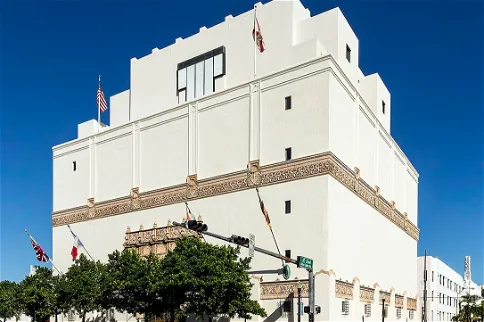
Housed in a seven-story Spanish Renaissance building on Washington Avenue, the museum is part of Florida International University and draws from a collection that spans the Industrial Revolution through World War II. Here, a toaster sits alongside propaganda posters, and Art Nouveau bookbindings share space with World's Fair memorabilia, each piece revealing how design reflected and influenced the social upheavals of its time.
From Private Obsession to Public Resource
Miami Beach native Mitchell Wolfson Jr. began collecting rare books and design objects in the 1970s, driven by a fascination with how visual culture shaped the modern world. His collection grew so vast that by 1986 he owned 90% of the Washington Storage Company building where he kept it all.
The former storage facility, built in 1927 with thick concrete walls to protect wealthy northerners' furniture from Florida's humidity, proved the perfect vault. Wolfson established The Wolfsonian Foundation that same year, hiring founding director Peggy Loar to transform his personal archive into a research center. After architect Mark Hampton's sleek 1992 renovation added modern galleries around dramatic light wells, the museum opened to the public in 1995. Two years later, Wolfson gifted the entire collection and facility to Florida International University, ensuring its preservation and accessibility for future generations.
Design as a Weapon and a Vision
The museum's 180,000 objects span furniture, industrial design, ceramics, rare books, posters, and paintings from countries including the United States, Germany, Italy, Britain, and the Netherlands. The British Arts and Crafts holdings reportedly form the largest collection outside the UK, featuring works by William Morris and Charles Rennie Mackintosh.
Political propaganda receives special attention, with comprehensive materials from Fascist Italy, Nazi Germany, and the Soviet Union that may be unmatched in American institutions. American industrial design showcases streamlined radios, cameras, and clocks by Norman Bel Geddes and Raymond Loewy. The World's Fair collection includes furnishings and ephemera from expositions dating back to 1851, while the Dutch and Italian Art Nouveau sections feature complete period rooms and Nieuwe Kunst bookbindings.
Where History Meets Architecture
The building itself tells stories. Cars once drove through the main entrance to unload furniture into Miami Beach's first freight elevator, still operational today. The ground floor remained storage-free to prevent flood damage during hurricanes. Original vault doors and architectural elements from the Washington Storage Company coexist with salvaged treasures like the ornate tile façade from Pennsylvania's demolished Norris Theater, now reassembled as a fountain backdrop in the lobby.
The museum maintains a non-circulating research library of 60,000 items on the third floor, while most of the 120,000-object collection resides in a converted Bell Telephone building offsite. Flags of the most-represented nations fly above the Washington Avenue entrance. The Wolfsonian also operates a teaching gallery at FIU's Frost Art Museum and has a sister institution, the Wolfsoniana, overlooking the sea in Genoa, Italy.
Wolfsonian-fiu Highlights & Tips
- British Arts and Crafts Gallery Explore one of the largest collections of William Morris, Charles Rennie Mackintosh, and Arts and Crafts Movement works outside the United Kingdom.
- Propaganda Collections View rare political posters, prints, and publications from Fascist Italy, Nazi Germany, and the Soviet Union that illustrate design's role in shaping ideology.
- American Industrial Design See streamlined objects from the machine age, including radios, cameras, and household items by designers like Norman Bel Geddes and Raymond Loewy.
- The Building's Architecture Don't miss the original 1927 Spanish Renaissance features, working freight elevator, and the stunning Norris Theater tile fountain in the lobby.
- World's Fair Ephemera Discover furnishings, sculptures, and memorabilia from international expositions including the 1925 Paris Exposition and 1933 Chicago World's Fair.
- Research Library Access The third-floor research library with 60,000 rare books and periodicals is open to visitors by appointment. Schedule ahead to explore this non-circulating collection.
- Location in Art Deco District The museum sits on Washington Avenue in Miami Beach's historic district, making it easy to combine your visit with exploring the surrounding Art Deco architecture.
- Multiple Gallery Floors Permanent galleries occupy the fifth floor, while the sixth and seventh floors host rotating temporary exhibitions. Allow time to explore all levels.
- Museum Café and Shop The ground floor features a café and bookstore where you can browse design publications and exhibition catalogues related to the collections.
The Wolfsonian-FIU asks visitors to look beyond aesthetics and consider how design movements from Art Nouveau to Art Deco carried the weight of political movements, technological change, and social transformation. Standing before a streamlined toaster or a World War I poster, you're confronting objects that once sold not just products but entire ideologies.
Mitchell Wolfson Jr. continues collecting for his separate downtown Miami research center, with those holdings destined to eventually join the Wolfsonian's collection. Until then, the museum continues expanding access to its current treasures, supported by major grants that are digitizing the collection and renovating spaces. Whether you're drawn to the Arts and Crafts movement or curious about propaganda's visual language, the museum demonstrates that between 1885 and 1945, nothing was ever just a chair or just a poster.


