Images of Boniface VIII Palace
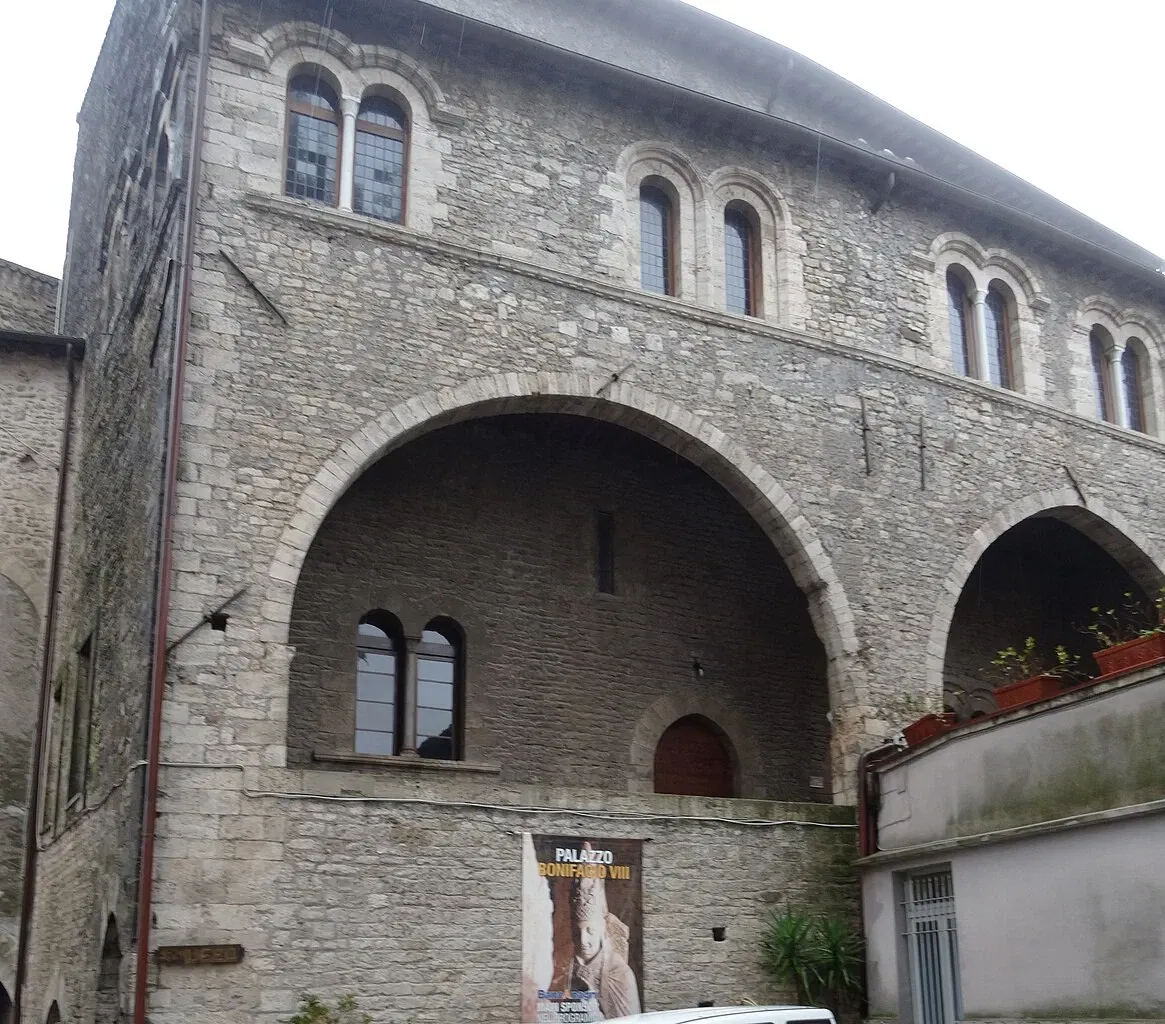

The Palace of the Popes, also known as the Boniface VIII Palace, is a significant historical site in Anagni, a hill town in central Italy. The palace has a rich history, closely associated with Pope Boniface VIII. It was later bought by his nephew, Peter II Caetani, and now houses a museum named after the Pope. The palace is currently part of a property owned by the Cistercian Sisters of Charity and is used in part as their motherhouse.
The Anagni area has been of significant interest to the papacy throughout history. Its proximity to Rome and its historical use as a place for respite have made it a favored location. During the days of the Roman Empire, several emperors, including Marcus Aurelius, Septimius Severus, Commodus, and Caracalla, spent their summers in Anagni to escape the heat of Rome and the city's endemic diseases.
The present Anagni Cathedral is another significant historical site in the area. It is known to have been built on the site of a temple dedicated to the goddess Ceres and dates back to the 9th century. The cathedral has witnessed several important events in the history of the papacy, including the promulgation of the Concordat of Worms by Pope Callistus II in 1122 and the excommunication of the Emperor Frederick Barbarossa by Pope Alexander III in 1160.
Open daily
FROM THE BEGINNING OF APRIL TO THE BEGINNING OF NOVEMBER
Monday – Friday: 9:30 – 13:00 / 15:00 – 19:00
Saturday and Sunday: 9:30 am – 7:00 pm
Guided tour at 6:15 pm
FROM 4 NOVEMBER TO THE END OF MARCH
Monday – Friday: 9:30 – 13:00 / 15:00 – 18:00
Saturday and Sunday: 9:30 am – 6:00 pm
Guided tour at 5:15 pm
Strada Vittorio Emanuele, 238, Anagni
No exhibitions in Boniface VIII Palace have been found.
Boniface VIII Palace has 1 rating.
The Boniface VIII Palace in Anagni, Italy, offers visitors a glimpse into medieval papal history. Located in the historic center of Anagni, this 13th-century palace is known for its historical significance and well-preserved frescoes. Many visitors appreciate the rich artwork and architectural details throughout the palace, particularly in the Sala delle Oche (Hall of the Geese) and the private papal apartments. The guided tours are often praised for providing insightful information about the palace's history and the life of Pope Boniface VIII. Some reviewers note that the palace is relatively small, which allows for a focused and manageable visit. However, a few visitors mention that some areas could benefit from better lighting to enhance the viewing experience of the frescoes. The palace's location in the charming town of Anagni adds to its appeal, with many recommending combining the visit with exploring the town's other historical sites. While the museum receives positive feedback for its historical value, some visitors suggest that additional information panels in multiple languages could improve the experience for international tourists. Overall, the Boniface VIII Palace is considered a worthwhile stop for those interested in medieval history and religious art, offering a window into an important period of papal history.
This rating is based on the rating of this museum on several other platforms.